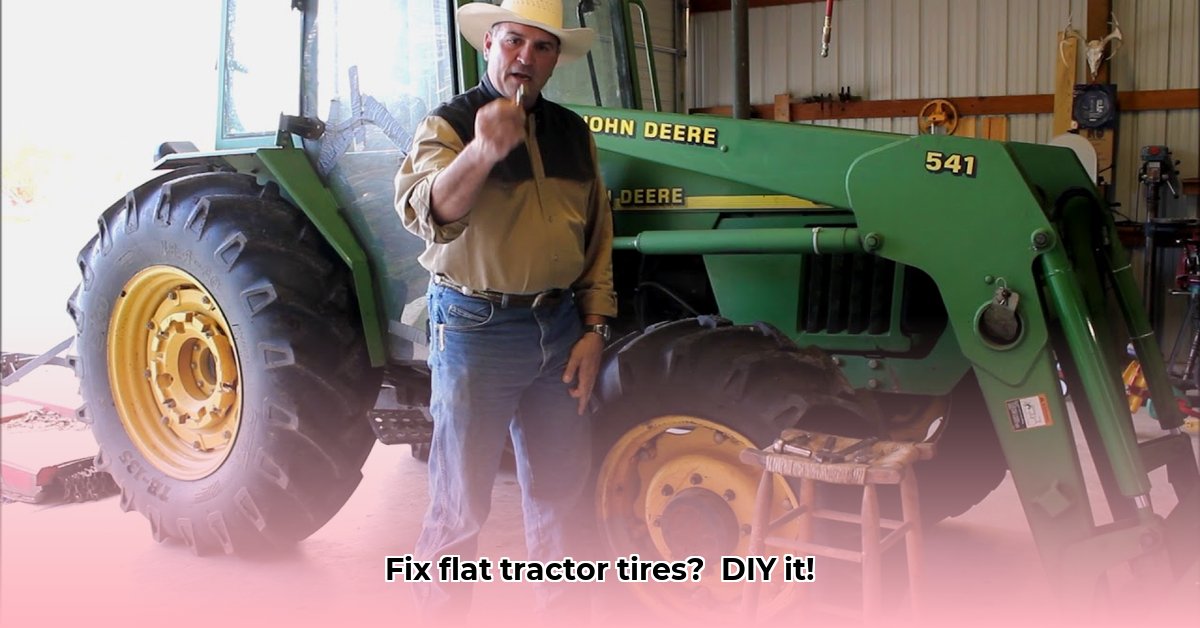
Maintaining your tractor's tires is crucial for efficiency and safety. A faulty valve stem can lead to downtime and costly repairs. This guide provides a step-by-step approach to replacing tractor tire valve stems, saving you time and money. We'll cover both tubed and tubeless tires. For more detailed information, see this helpful guide.
Assessing the Situation: Identifying Your Tire Type and Stem
Before you begin, determine your tire's type (tubed or tubeless) and valve stem style. Tubeless tires don't use inner tubes; the tire seals directly to the rim. Tubed tires require an inner tube. Examine the valve stem; is it straight or angled? Photographing the valve stem before removal aids in selecting the correct replacement. Understanding the extent of damage (a small leak versus a completely broken stem) will guide your repair strategy. A severely damaged valve stem may necessitate professional help.
Tools and Materials: Gathering Your Equipment
The right tools make the job easier and safer. Here’s what you'll need:
- Valve stem removal tool: This tool safely extracts the old stem.
- New valve stem: Ensure you purchase a replacement matching your tire type (tubed or tubeless) and stem style.
- Impact wrench (recommended) or adjustable wrench: Use this to securely tighten the new stem's nut. Note that an impact wrench provides greater torque control, ideal for older, stubborn valve stems.
- Soapy water (in a spray bottle): Essential for detecting leaks during the process, and for aiding bead seating.
- Shop rags or towels: To keep everything clean.
- Tire pressure gauge: Crucial for verifying proper inflation after repair.
- (For Tubed Tires): Tire irons and potentially a bead breaker (depending on tire size and construction). Consult your tractor's manual for specific instructions on bead breaking. Safety glasses are important.
Step-by-Step Instructions: Replacing the Valve Stem
The process differs slightly depending on whether you have a tubed or tubeless tire.
Tubeless Tires: A Simplified Repair
Safety First: Deflate the Tire: Completely deflate the tire. This prevents accidental injury or inflation pressure damage.
Remove the Valve Core: Use a valve core removal tool to remove the valve core. This releases the remaining air safely and slowly.
Remove the Old Stem: Using the valve stem removal tool, carefully pry out the old stem. Avoid scratching the tire.
Insert the New Stem: Carefully insert the new valve stem into the valve hole. Ensure a snug fit.
Tighten the Nut: Use your wrench to firmly tighten the nut on the new stem. Do not overtighten; a secure fit is key.
Inflate the Tire: Inflate to the manufacturer's recommended pressure (found on the tire sidewall or in your tractor's manual).
Leak Check: Spray soapy water around the valve stem and the entire tire bead. Bubbles indicate leaks; re-tighten the nut if necessary, or replace the valve stem again.
Tubed Tires: A More Involved Process
Deflate Completely: Release all air pressure from the tire.
Partial Tire Removal: Refer to your tractor's manual for instructions on removing the tire from the rim partially. You’ll need to access the inner tube's valve.
Remove Inner Tube Valve: Carefully remove the old valve stem.
Clean the Area: Remove any dirt or debris.
Install New Valve: Insert the new valve into the inner tube.
Reassemble: Carefully reassemble the tire and tube onto the rim.
Inflate: Inflate slowly while checking for leaks.
Leak Check: Thoroughly inspect for leaks by spraying with a soapy water mixture.
Seat the Bead: Ensure the tire bead is correctly fitted around the rim.
Bead Seating Techniques: Ensuring a Secure Fit
Proper bead seating is crucial for tire integrity and safety. Use soapy water to aid in lubrication and leak detection. During inflation, carefully monitor the tire bead, ensuring it’s fully seated against the rim. If you encounter difficulty, using tire irons might help, but proceed with caution to avoid causing damage. For extremely stubborn tires a professional bead seater tool may be needed.
Alternative Solutions and Preventative Maintenance
For minor leaks, temporary repair kits offer short-term solutions. For long term solutions, consider fluid-filled tires; although, these offer a harsher ride quality for some vehicle applications. However, regular inspection and prompt attention to any corrosion or damage are invaluable preventative measures. Addressing small issues early prevents more extensive and expensive repairs down the line. Also, consider using corrosion-inhibiting sealants.
Conclusion: Maintaining Peak Tractor Performance
Replacing a tractor tire valve stem doesn’t need to be daunting. By following these steps and using the appropriate tools, you can handle this repair effectively and keep your equipment in optimal working order. Always refer to your tractor's manual for specific instructions and safety guidelines relevant to your model. Remember, preventative maintenance is key to maximizing tire lifespan and avoiding unexpected downtime.